





Every day, millions of traders search for the next great investment. They scan charts, read earnings reports, follow breaking news, and debate the latest market headlines, hoping to discover an edge before everyone else does. Meanwhile, a small group of legendary investors quietly manages hundreds of billions of dollars, making decisions backed by decades of experience, exhaustive research, disciplined risk management, and an unwavering commitment to protecting capital. Four times a year, those decisions become public. The question is, are you paying attention?
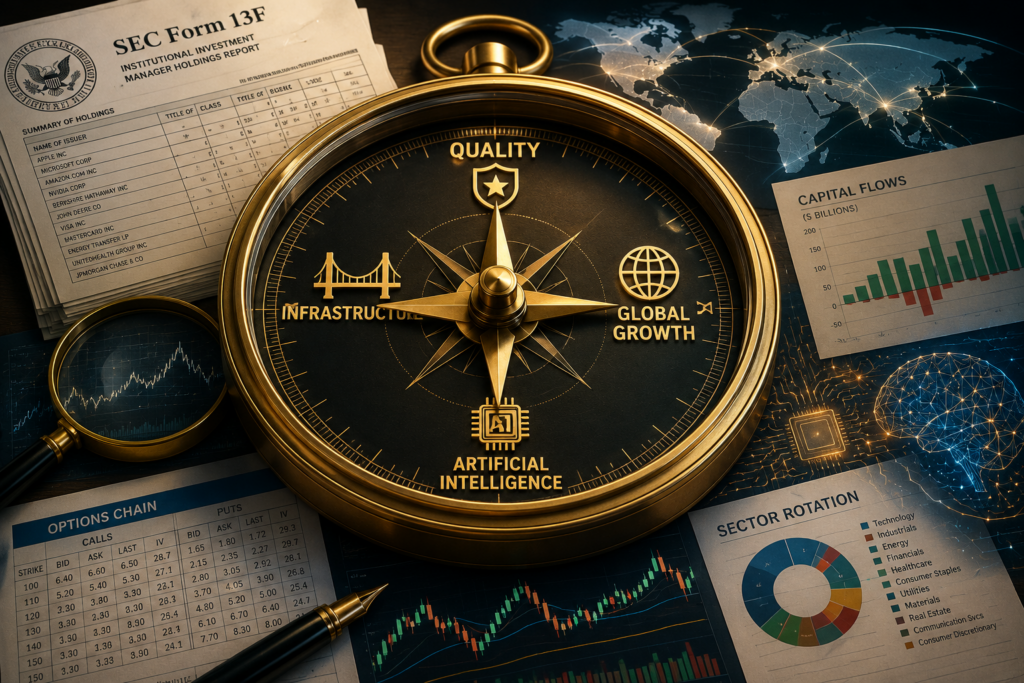
The Securities and Exchange Commission (SEC) requires many of the world’s largest investment managers to disclose their U.S. stock holdings through a filing known as Form 13F. Most traders either ignore these reports or dismiss them as stale because they are released weeks after the end of each quarter. That conclusion misses the opportunity entirely. A 13F could be viewed by some as a blueprint. It provides a rare opportunity to study how some of the greatest investors of our generation allocate capital, manage risk, and identify long-term opportunities.
You’ll never know the exact day Warren Buffett bought a stock. You won’t know the precise price Howard Marks paid or whether David Tepper built a position by purchasing shares outright or by selling put options and letting the market come to him. Stanley Druckenmiller may have accumulated a position over several weeks as his macro thesis evolved. That uncertainty doesn’t diminish the value of these filings. If anything, it reinforces an important lesson. Great investors rarely think in terms of perfect entries. They think in terms of probabilities, conviction, and disciplined execution.
This article isn’t about following the whales. It’s about learning to think like one. The objective isn’t to copy Warren Buffett, Howard Marks, Stanley Druckenmiller, or David Tepper trade for trade. It’s to reverse engineer their thinking. Their portfolios reveal far more than a collection of stock picks. They reveal how professionals evaluate opportunity, control risk, size positions, and patiently wait for the market to come to them. If you can understand the process behind their decisions, you’ll gain something far more valuable than a list of stocks to buy. You’ll begin developing the mindset that has helped the world’s greatest investors compound wealth over decades.
And there is one more lesson that is often overlooked. Most investors judge a trade by how much money it made. Professional investors judge it by how much risk was required to make it. The best trades are rarely the ones with the biggest gains. They’re the ones that experienced the smallest drawdowns, the least emotional stress, and the greatest consistency. That is the lens through which we’ll examine these portfolios, because understanding how these investing legends manage risk may prove even more valuable than knowing what they bought.
Why Every Serious Trader Should Read a 13F Filing
Every quarter, something remarkable happens on Wall Street, and almost nobody notices. While financial television debates the next Federal Reserve meeting, analysts dissect earnings reports, and social media argues over the latest market headline, some of the world’s most successful investors quietly reveal what they actually own. Warren Buffett. Howard Marks. Stanley Druckenmiller. David Tepper. Collectively, they oversee hundreds of billions of dollars and employ teams of analysts whose full-time job is to uncover opportunities long before they become obvious. Four times a year, the Securities and Exchange Commission requires many of these institutional managers to disclose their U.S. equity holdings through Form 13F. For investors willing to do a little homework, these filings provide one of the clearest windows into how professional money is being deployed.
The biggest misconception surrounding 13F filings is that they’re “old news.” It’s true that they are released after the end of each calendar quarter, and they don’t tell us the exact day a stock was purchased or the precise price paid. But that criticism misses the point. A 13F was never intended to be a real-time trading signal. Its real value lies elsewhere. Think of it as a blueprint for institutional thinking. It reveals where experienced investors are committing capital, which industries they believe offer long-term opportunity, which positions they’re increasing, and which ones they’re abandoning. Those decisions rarely happen by accident.
There is another important reason these filings deserve your attention. The world’s best investors don’t always build positions the way individual traders imagine. Many accumulate shares over weeks or months. Others establish positions by selling cash-secured put options, collecting premium while waiting for the market to come to them. Some average into positions as their conviction grows. The 13F doesn’t reveal those mechanics, but it does reveal the destination. By comparing one quarter to the next, you can begin to reconstruct the broad outline of their strategy and identify the themes shaping their portfolios.
This article isn’t about copying Warren Buffett, Howard Marks, Stanley Druckenmiller, or David Tepper. It’s about learning to think like them. There is a profound difference. Following a portfolio blindly can be dangerous because your time horizon, objectives, and tolerance for risk are almost certainly different from theirs. But studying how these investors allocate capital, manage uncertainty, and build conviction can fundamentally change the way you approach markets. Their portfolios become case studies in decision making, not shopping lists.
Perhaps the most valuable lesson has nothing to do with returns. Most investors judge a trade by how much money it made. Professionals often judge it by how much risk was required to make it. How far did the position move against them before it worked? How much volatility did they endure? How patiently did they wait before acting? Those questions reveal far more about the quality of an investment process than a headline gain ever could. If you can learn to reverse engineer that process, you won’t simply discover what the smartest investors bought. You’ll begin to understand why they bought it, and that is where the real edge begins.
The first thing many traders say when they hear about a 13F filing is, “That information is already old.” That’s like refusing to read a history book because the Battle of Gettysburg is over. Yes, the trades happened sometime during the previous quarter. No, you won’t know whether Warren Buffett bought on Tuesday afternoon or Thursday morning, or whether David Tepper paid $80 or $83 a share. But if that’s all you’re looking for, you’re missing the forest because you’re busy measuring the bark on one tree.
Think about how professionals actually invest. They don’t wake up one morning, buy 40 million shares before lunch, and head to the golf course. Large investment managers move capital the way an aircraft carrier changes direction, slowly, deliberately, and with plenty of planning. They often spend weeks building a position, adding on weakness, trimming on strength, or waiting patiently for the right opportunity. In many cases, they never even begin by buying the stock. They sell cash-secured put options, collect premium, and let the market decide whether they’ll eventually own the shares. Individual investors tend to chase prices. Institutions often let prices come to them.
That’s why obsessing over the exact purchase price is the wrong question. The better question is, “What convinced one of the smartest investors in the world to commit billions of dollars to this company?” The exact entry price matters far less than the underlying thesis. Were they buying a dominant business? A turnaround? A cyclical recovery? An artificial intelligence leader? A company positioned to benefit from lower interest rates? Those are the questions that reveal how professionals think.
For practical purposes, the best benchmark we have is the stock’s price at the end of the reporting quarter. Is it perfect? Not even close. But it gives us a consistent starting point for measuring how those ideas performed after they became public. More importantly, it allows us to compare one investment manager with another. Buffett may be hunting for wonderful businesses at reasonable prices. Howard Marks may be looking for assets everyone else has abandoned. Stanley Druckenmiller may be positioning for a major macroeconomic shift. David Tepper may be buying into fear when everyone else is running for the exits. Different philosophies, different methods, but the same report card.
The real value of a 13F isn’t that it tells you exactly what to buy tomorrow morning. Its value is that it leaves behind a trail of footprints. Follow enough of those footprints over time, and patterns begin to emerge. You discover how great investors think about risk, patience, conviction, and opportunity. That’s not stale information. That’s a graduate-level education in capital allocation, and the tuition is free.
Most investors look at a legendary portfolio and ask the wrong question. They want to know how much money Warren Buffett made on Apple, how much Stanley Druckenmiller earned trading semiconductors, or how quickly David Tepper profited from buying into fear. Returns are easy to measure, easy to celebrate, and easy to misunderstand. They tell you where an investment finished. They tell you very little about the journey.
Professional investors begin somewhere else. They study risk before they study reward. A stock that earns 30 percent but falls 40 percent along the way demands a very different temperament than one that quietly appreciates 25 percent with only modest pullbacks. The first tests conviction. The second preserves it. Great investing is not merely about finding profitable ideas. It is about finding profitable ideas that allow you to stay invested long enough to benefit from them.
This is why due diligence matters. When you examine a 13F filing, don’t stop at the list of companies. Ask harder questions. How volatile was the stock before and after the position appeared? Did the investment manager buy into weakness or strength? Was the position built patiently over several quarters? Did the stock move sharply against them, or did it begin working almost immediately? Those answers reveal far more about the quality of the decision than the final return ever will.
The world’s greatest investors understand a simple truth. Capital compounds best when losses are controlled. Their objective is not to win every trade. It is to avoid the kind of mistakes that permanently impair capital. That discipline is one reason their performance has endured through recessions, inflation, market bubbles, and financial crises. They recognize that protecting capital is not a defensive strategy. It is the foundation of long-term wealth creation.
As you study the portfolios of Buffett, Marks, Druckenmiller, and Tepper, resist the temptation to focus only on the winners. Instead, focus on the process. Observe how they allocate capital, how patiently they build conviction, and how little unnecessary risk they appear willing to accept. The hallmark of a great trade is not simply the size of the profit. It is how little the position had to move against the investor before that profit was realized. That distinction may be the most valuable lesson hidden inside every 13F filing.
Here’s where things get interesting.
If you walked into the offices of Warren Buffett, Howard Marks, Stanley Druckenmiller, and David Tepper expecting to find four investors using the same playbook, you’d leave disappointed. One buys dominant businesses and is willing to hold them for decades. Another waits patiently for fear to create bargains. A third follows macroeconomic trends with remarkable flexibility. The fourth thrives when everyone else is convinced the world is coming apart. Different personalities. Different strategies. Different paths to success. Yet they all arrive at the same destination, consistently outperforming most investors.
That should tell you something important.
There isn’t one “right” way to invest. There are principles that endure, but there is no universal formula. Buffett isn’t trying to be Druckenmiller. Druckenmiller isn’t trying to be Marks. Tepper doesn’t wake up wondering what Buffett is doing. Each investor understands his own strengths, trusts his own process, and ignores the pressure to think like everyone else. That’s one reason they’ve remained successful through bull markets, bear markets, recessions, bubbles, and recoveries.
This is exactly why studying their 13F filings is so valuable. You’re not looking for a magic stock tip. You’re looking for recurring patterns. What kinds of businesses attract Buffett? When does Marks become aggressive? What macro trends is Druckenmiller betting on? When does Tepper decide fear has gone too far? Those patterns reveal how they evaluate opportunity long before they reveal the names of individual stocks.
Think of each portfolio as a fingerprint. Every quarter, it reflects the investor’s worldview. Buffett’s portfolio often tells a story about durable businesses and long-term cash generation. Marks’ portfolio reflects patience, valuation, and risk control. Druckenmiller’s holdings reveal where he believes capital and liquidity are flowing next. Tepper’s investments often signal that panic has created opportunity where others see only danger. The stocks change. The philosophy rarely does.
Your job isn’t to imitate them. It’s to understand them. The more portfolios you study, the easier it becomes to recognize themes before they become headlines. Over time, you’ll notice that the greatest investors aren’t simply buying stocks. They’re making calculated decisions about interest rates, liquidity, consumer behavior, technology, energy, demographics, and the economy itself. Every position is part of a larger story.
That’s the real opportunity hidden inside a 13F filing. It gives you a chance to sit beside some of the greatest investors of our time and observe how they think, without managing billions of dollars or employing a staff of analysts. Learn to recognize their patterns, challenge your own assumptions, and reverse engineer the reasoning behind their decisions. When you do, you’ll stop chasing stock tips and start building a process of your own while using VantagePoint’s patented artificial intelligence.
Here is what these legendary investors acquired in the 1st Quarter of 2026. No, you don’t know the exact day they bought or the precise price they paid. But you do know something far more valuable. You know what they believed was worth owning. That gives you the opportunity to study their thinking, evaluate their convictions, and, over time, measure just how effective those decisions turned out to be.
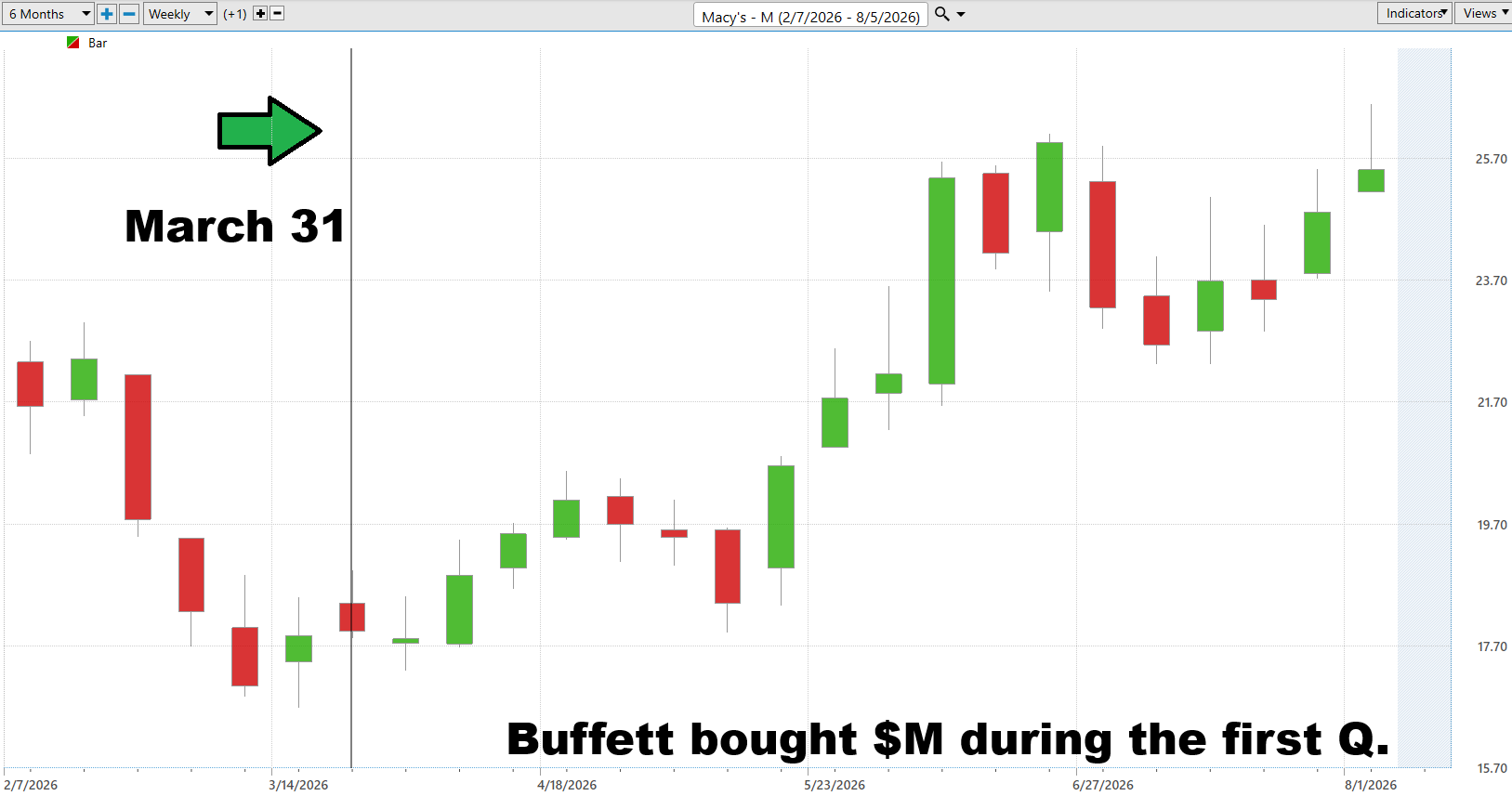
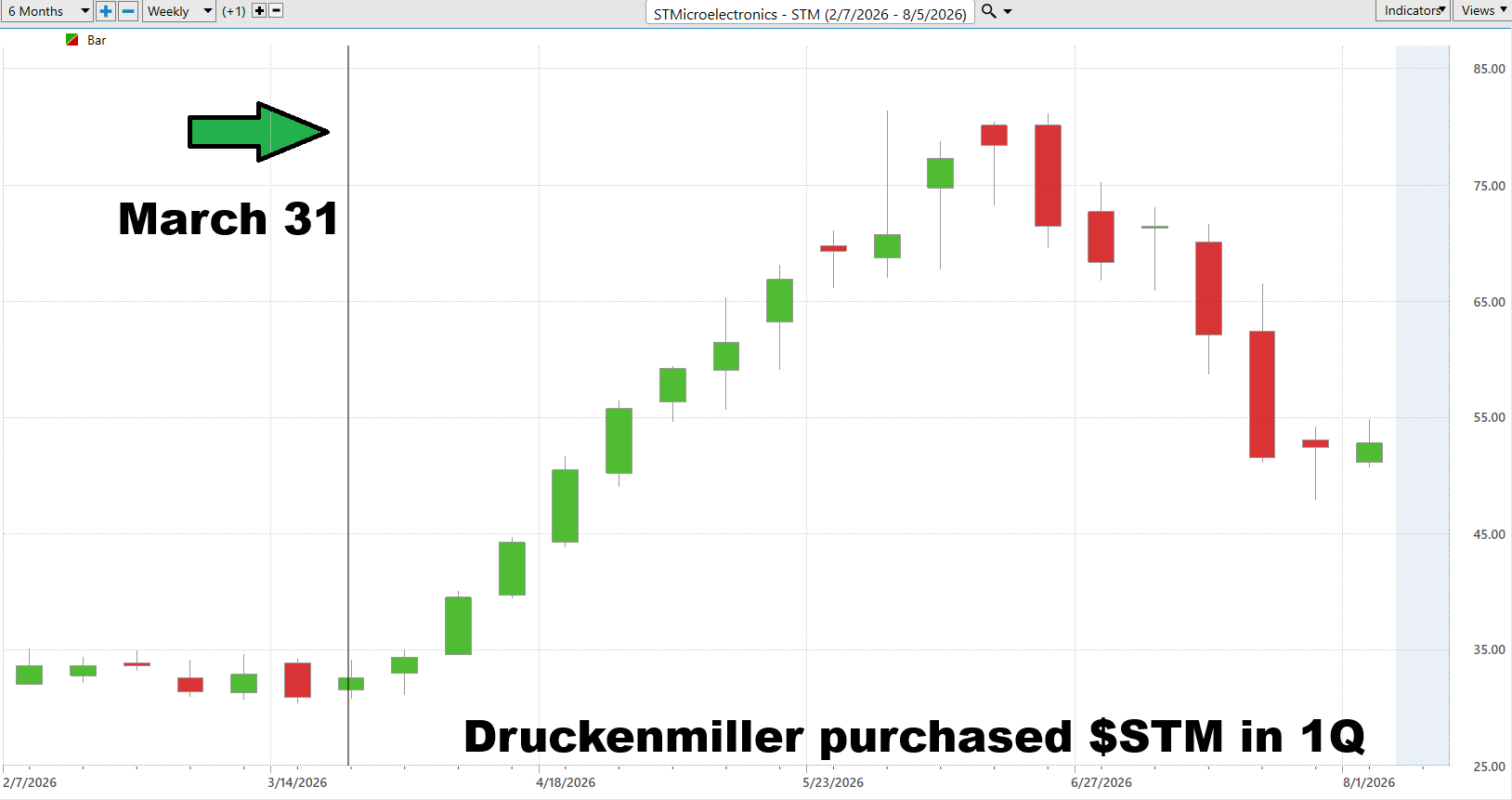
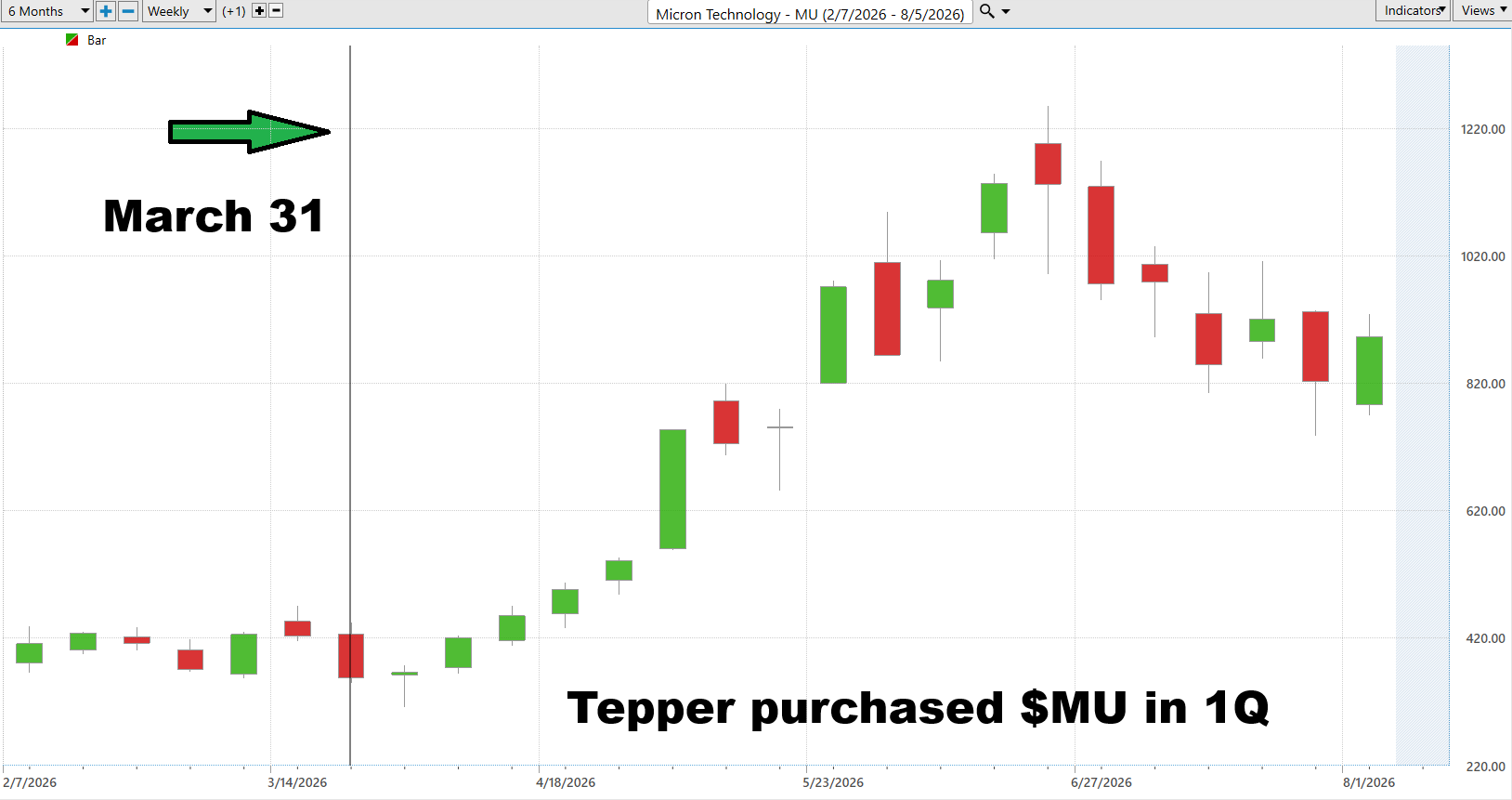
The charts below tell that story. For the sake of brevity, I’m highlighting only the best-performing first-quarter purchase from each manager’s 13F filing. That’s not because the other holdings aren’t important. Quite the opposite. I encourage you to dig deeper. Study the complete filings. Research every position. Ask yourself why these investors committed billions of dollars to those companies, what macroeconomic forces they anticipated, and what risks they believed the market was mispricing. The real value isn’t in copying great investors. It’s in reverse-engineering how they think. Do enough of that, and you’ll begin to see the market through the eyes of professionals who have spent decades compounding wealth rather than chasing headlines.
Warren Buffett: The Business Owner
Warren Buffett has been investing professionally for more than seven decades and has transformed Berkshire Hathaway into one of the world’s most valuable companies. His philosophy is deceptively simple: buy exceptional businesses with durable competitive advantages, strong cash flow, capable management, and the ability to compound value for many years. He has little interest in chasing market fads or predicting tomorrow’s headlines. Instead, he focuses on buying great companies at sensible prices and allowing time to do the heavy lifting.
While he claims to have officially retired. His DNA is embedded into the fabric of Berkshire-Hathaway.
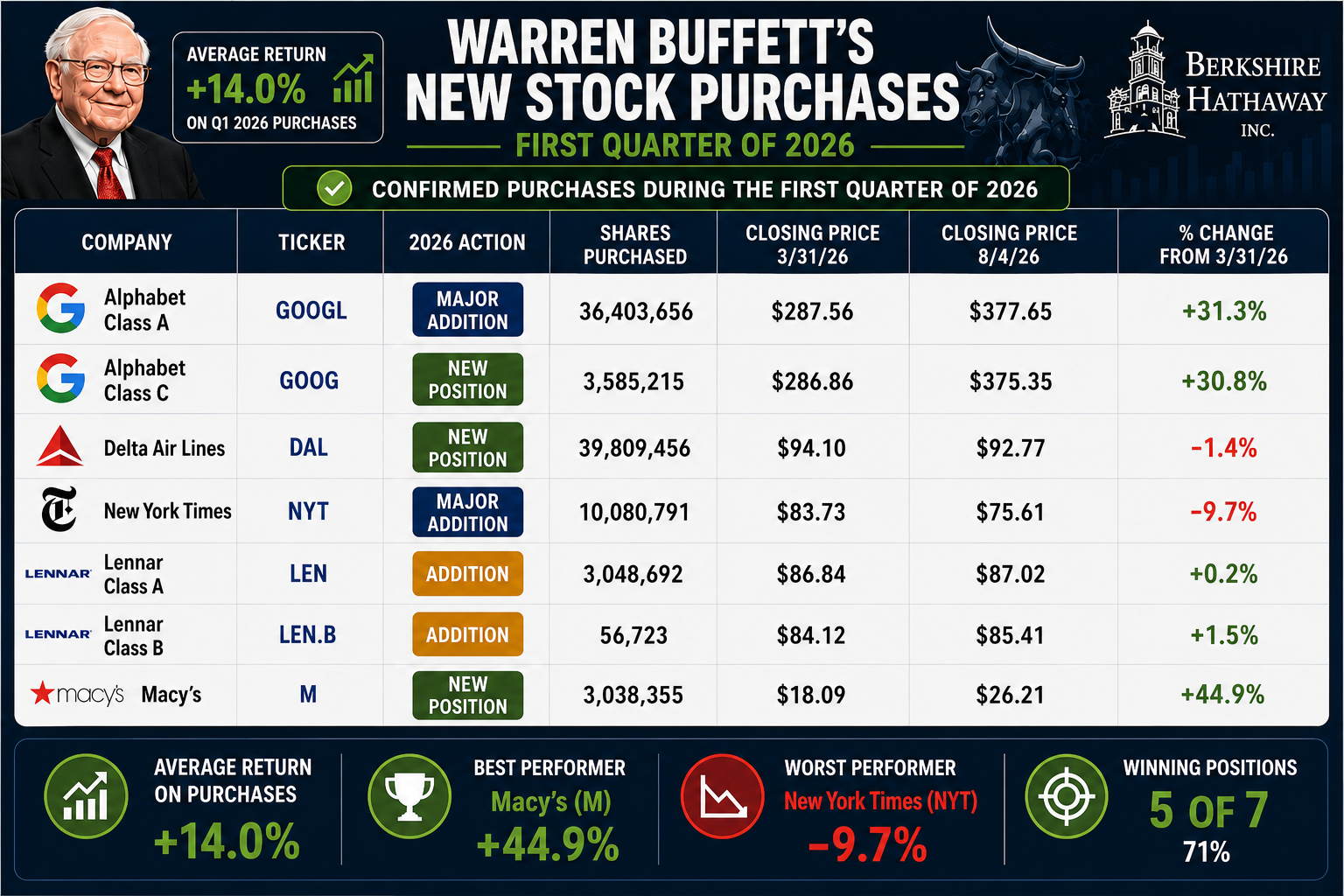
Traders should pay attention to Buffett because he reminds us that price and value are not the same thing. His portfolio reflects conviction, patience, and an unwavering focus on business quality. Even if your holding period is measured in weeks instead of years, understanding why Buffett commits billions of dollars to a company can provide valuable insight into the characteristics of exceptional businesses.
At first glance, Warren Buffett’s purchases appear surprisingly diverse. Technology, airlines, homebuilders, media, and retail don’t seem to share much in common. Look closer, however, and a consistent theme emerges. Buffett appears to be increasing exposure to established companies with recognizable brands, durable cash flows, and reasonable valuations rather than chasing speculative growth.
His largest additions to Alphabet suggest confidence that artificial intelligence will strengthen, not weaken, Google’s dominant competitive position. Delta Air Lines reflects continued optimism about consumer spending and travel demand, while Lennar points toward confidence that housing activity can improve if interest rates eventually moderate. Even Macy’s and The New York Times fit Buffett’s long-standing habit of buying recognizable businesses when he believes Wall Street has become overly pessimistic. Rather than making an aggressive macroeconomic bet, Buffett seems to be positioning Berkshire Hathaway for an environment in which quality businesses continue compounding earnings despite economic uncertainty.
Howard Marks: The Risk Manager
Howard Marks built his reputation as the co-founder of Oaktree Capital Management by mastering something many investors overlook, risk. For more than forty years, he has focused on credit markets, distressed assets, and market cycles. Rather than asking how much money he can make, Marks begins by asking how much he could lose. That mindset has helped him navigate booms and busts while preserving capital through some of the most challenging financial environments in history.
Traders should study Marks because he demonstrates that successful investing is often about patience rather than prediction. He is willing to wait for the right opportunity. His portfolio is a reminder that avoiding poor decisions is often just as important as making brilliant ones.
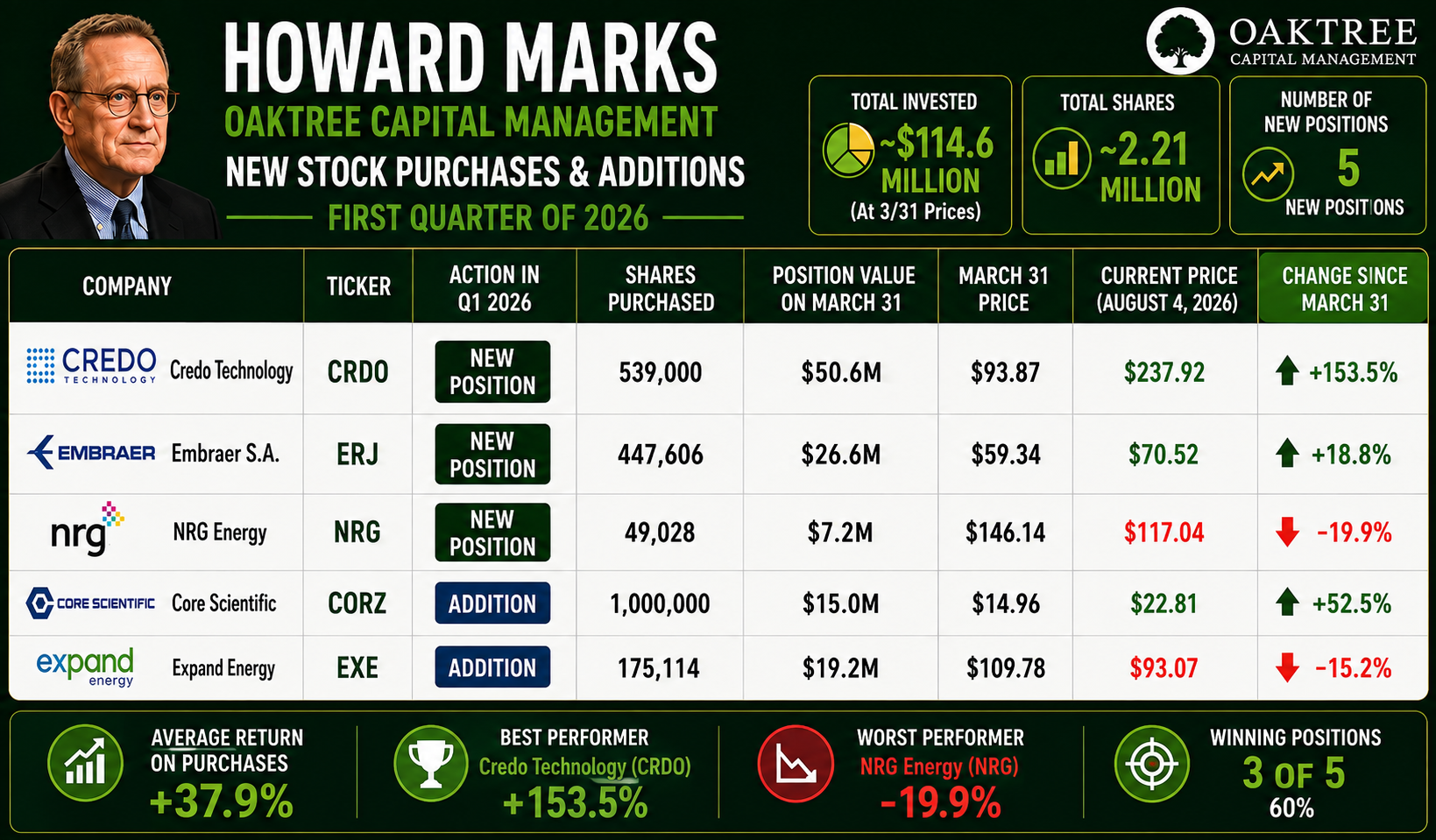
Howard Marks’ portfolio reflects something very different. Rather than concentrating on household names, he appears focused on businesses tied to long-term infrastructure spending and industrial expansion. Credo Technology supplies networking components that support artificial intelligence data centers. Core Scientific operates digital infrastructure supporting high-performance computing. Expand Energy benefits from growing electricity demand, while Embraer and NRG provide exposure to transportation and power generation.
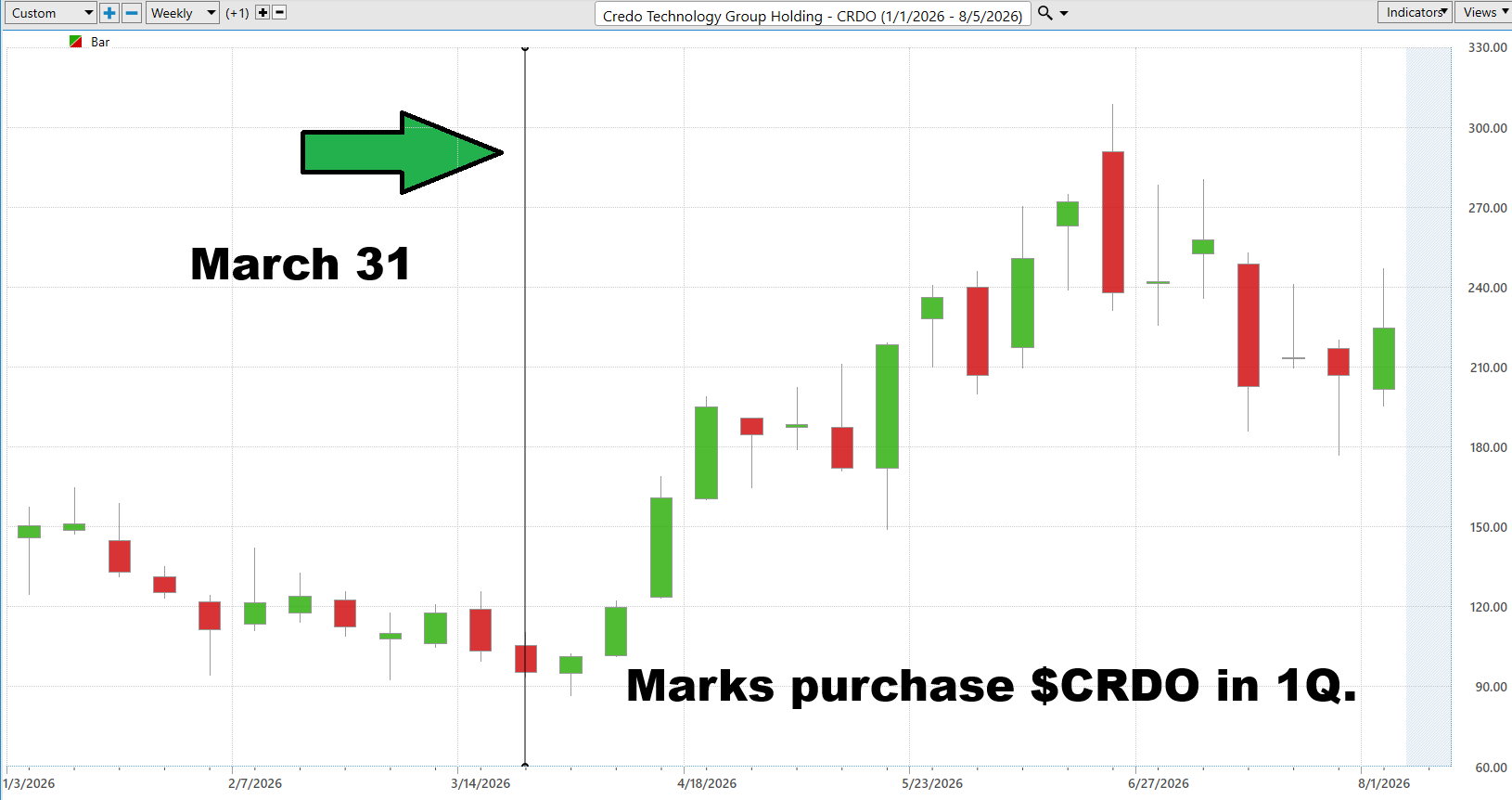
Viewed together, these purchases suggest Marks is positioning for a world requiring significantly more infrastructure than today’s economy currently possesses. Artificial intelligence, electrification, reshoring manufacturing, and expanding energy demand all require enormous capital investment. Even though a few of these positions have experienced short-term weakness, the broader message is clear. Marks appears less interested in predicting next quarter’s earnings than in identifying industries likely to benefit from structural investment over many years.
Stanley Druckenmiller: The Macro Strategist
Stanley Druckenmiller has spent more than four decades identifying major economic trends before they become widely recognized. His investment decisions are shaped by interest rates, liquidity, central bank policy, economic growth, and capital flows. Unlike Buffett, he has no hesitation about changing his portfolio when the facts change. His flexibility has made him one of the most successful macro investors of his generation.
Traders should pay attention because Druckenmiller teaches an essential lesson: markets reward those who adapt. His portfolio often reveals where he believes institutional money is flowing next, making his quarterly filings an excellent source of ideas for traders looking to understand the bigger forces driving asset prices.
Stanley Druckenmiller’s portfolio carries the fingerprints of a classic macro investor. His holdings span Argentina, semiconductors, biotechnology, and artificial intelligence, but they all point toward one underlying belief. Global economic conditions and liquidity are improving enough to support cyclical growth and renewed capital investment.
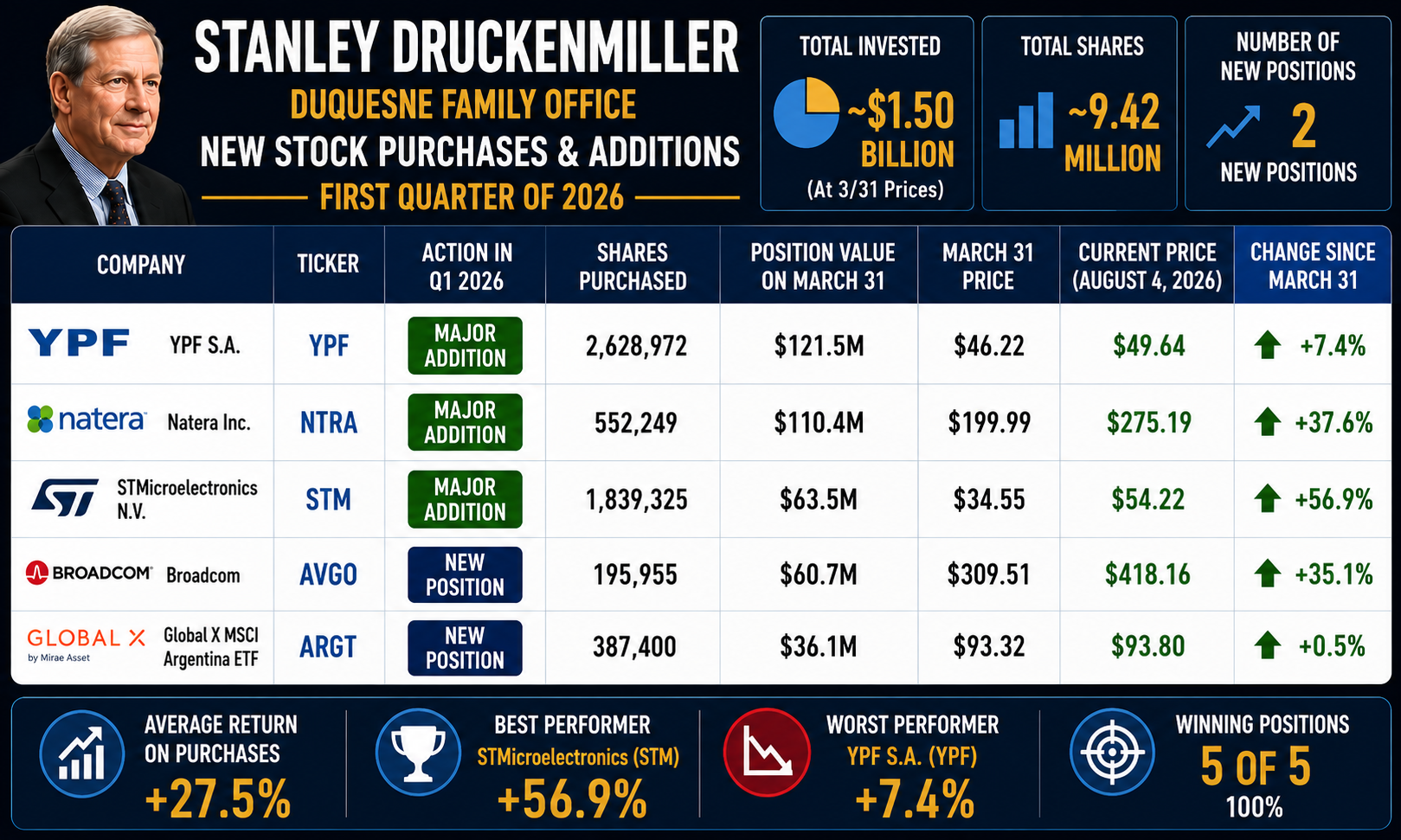
Argentina exposure through YPF and the Global X Argentina ETF suggests optimism toward economic reform and international capital returning to emerging markets. STMicroelectronics and Broadcom represent continued conviction in semiconductor demand driven by artificial intelligence and digital infrastructure. Natera reflects confidence that innovation in healthcare remains underappreciated. Rather than concentrating risk in one industry, Druckenmiller appears to be spreading capital across several global themes that all benefit from stronger economic growth, improving liquidity, and increased corporate investment.
David Tepper: The Opportunist
David Tepper founded Appaloosa Management and built a legendary reputation by buying when fear is at its highest. Whether investing during financial crises or periods of economic uncertainty, Tepper has repeatedly demonstrated the ability to recognize value when others are too frightened to act. His style combines macroeconomic analysis with an aggressive willingness to commit capital when the odds are in his favor.
Traders should study Tepper because he understands that the best opportunities often appear when sentiment is at its worst. His portfolio reflects courage backed by research, not emotion. Rather than reacting to headlines, he evaluates whether the market has overreacted and positions himself accordingly.
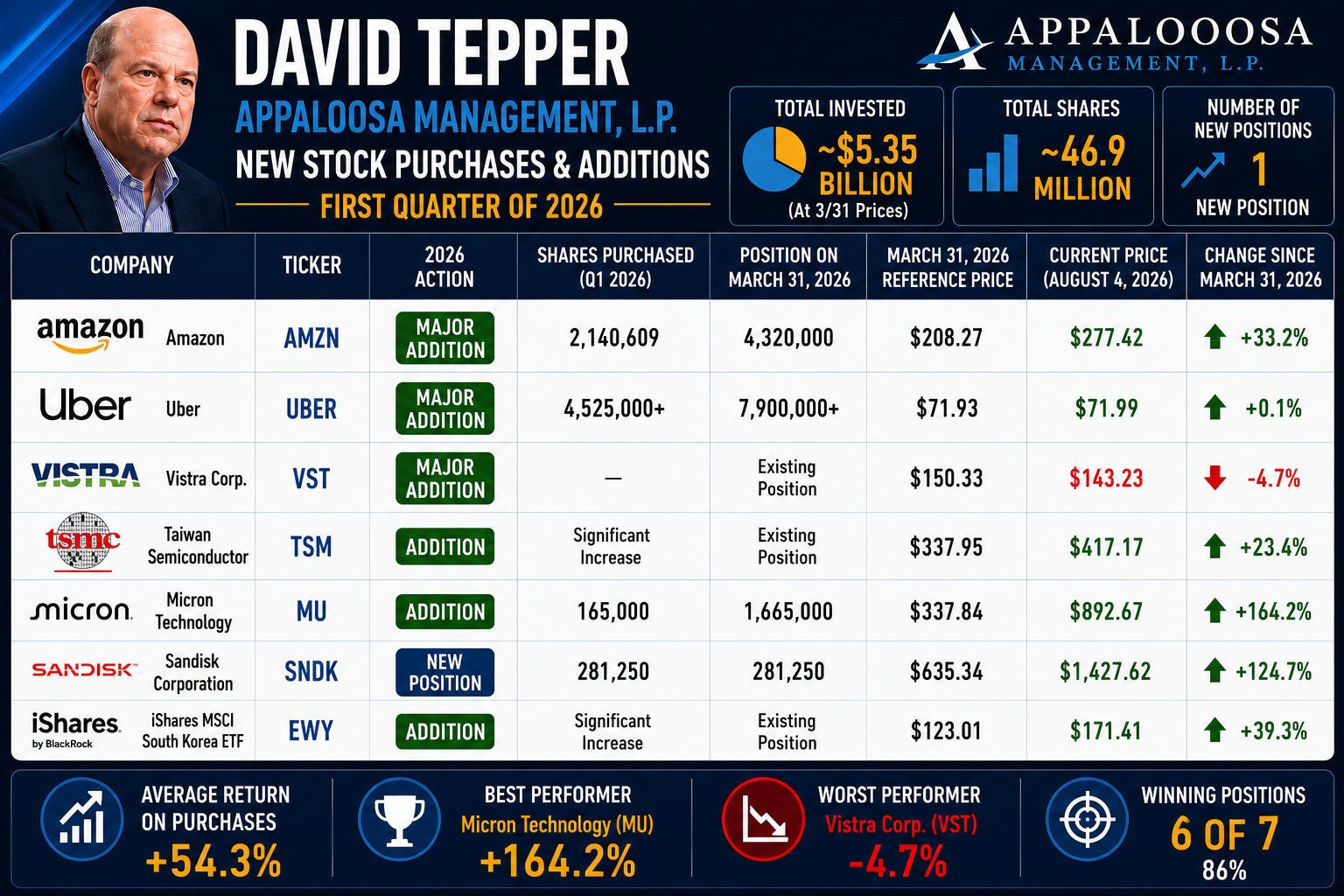
If Buffett’s portfolio is diversified and Marks’ reflects infrastructure, David Tepper’s portfolio tells an unmistakable story. Artificial intelligence dominates nearly every significant decision. Micron provides advanced memory used in AI servers. Sandisk expands storage capacity. Taiwan Semiconductor manufactures the world’s most advanced chips. Amazon supplies cloud infrastructure through AWS. Uber benefits from expanding digital platforms, while Vistra provides electricity needed to power increasingly energy-hungry data centers. Even the South Korea ETF adds exposure to a country deeply integrated into the semiconductor supply chain.
Taken together, the portfolio suggests Tepper believes the AI investment cycle remains in its early stages rather than nearing completion. His purchases span nearly every layer of the ecosystem, from chip manufacturing and memory to cloud computing and electric power. Instead of betting on a single company, he appears to be building exposure to the infrastructure supporting artificial intelligence itself. The message is difficult to miss. Tepper isn’t simply investing in AI. He’s investing in everything required to make AI possible.
These four investors don’t agree on every company, every sector, or every economic outlook. In fact, they often arrive at very different conclusions. That’s exactly why studying them is so valuable. Each portfolio represents a unique way of thinking about markets, risk, and opportunity. By comparing their holdings over time, you begin to see recurring themes, recognize where institutional capital is flowing, and develop a deeper understanding of how successful investors make decisions. The goal isn’t to become the next Buffett, Marks, Druckenmiller, or Tepper. The goal is to borrow the best ideas from each and build a process that works for you.
Although their portfolios look very different, they share several important conclusions. All four have committed capital to businesses they believe can benefit from long-term structural trends rather than short-term market noise. Artificial intelligence appears repeatedly, either directly through semiconductors and cloud infrastructure or indirectly through energy, networking, and digital infrastructure. At the same time, each manager expresses that conviction through a philosophy that has defined his career. Buffett focuses on durable businesses. Marks searches for long-term value created by structural change. Druckenmiller follows macroeconomic trends and capital flows. Tepper aggressively invests where he believes future growth will be strongest.
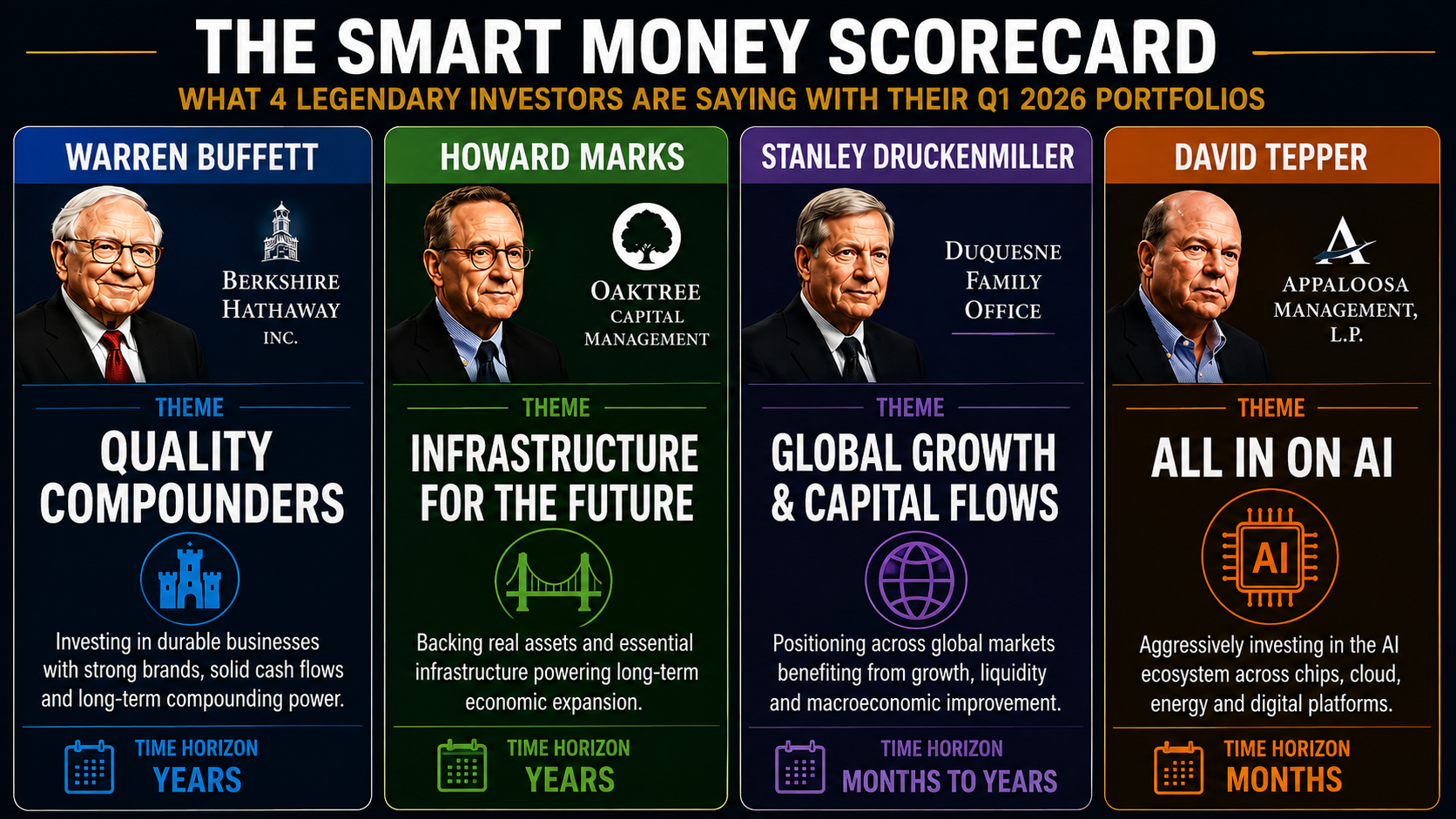
The broader lesson isn’t that these investors bought the same stocks. It’s that they reached similar conclusions about the future through different analytical frameworks. That is perhaps the most valuable insight hidden inside every 13F filing. The holdings are only the evidence. The real opportunity is learning to recognize the thinking that produced them.
The world’s greatest investors didn’t become legends by guessing where the market would go tomorrow. They built careers by developing disciplined processes, managing risk relentlessly, and allowing probabilities to work in their favor over thousands of decisions. Warren Buffett, Howard Marks, Stanley Druckenmiller, and David Tepper all invest differently, but they share one common characteristic. They never stop doing their homework. Every investment begins with due diligence. Every position reflects a carefully researched thesis. Every dollar committed has a reason behind it. That’s the real lesson hidden inside their 13F filings.
Study these four investors long enough and you’ll notice five habits appear again and again.
First, they do their homework before risking a dollar.
Second, they let opportunities come to them instead of chasing headlines.
Third, they think in probabilities rather than predictions.
Fourth, they treat risk management as seriously as return potential.
Finally, they remain patient enough to wait for the odds to shift decisively in their favor.
Those lessons are worth far more than any individual stock recommendation. Great investors don’t succeed because they know something the rest of us don’t. They succeed because they consistently do what most investors are unwilling to do: prepare carefully, think independently, manage risk relentlessly, and wait patiently until opportunity knocks.
One of the most practical ways many professional investors apply that research is through the use of cash-secured put options. Rather than chasing a stock higher, they determine what they believe is a fair price and then allow the market to come to them. Selling a cash-secured put generates income immediately because the investor collects an option premium. In exchange, the investor accepts the obligation to purchase the stock if it falls below the agreed-upon strike price before expiration. It is not a strategy for every trader, but when used properly, it can become a disciplined way to enter positions at prices you were already willing to pay.
Consider a simple example. Imagine you’ve completed your research and conclude that a stock trading at $100 represents an attractive long-term investment. Instead of buying the shares immediately, you sell the $95 cash-secured put and collect a $2 premium. If the stock remains above $95, you keep the premium and can repeat the process. If the stock declines below the strike price and you’re assigned the shares, you purchase them at $95. Because you already collected $2 in premium, your effective cost basis becomes $93. Think about that for a moment. You were happy to own the company at $100, yet by exercising patience and using options strategically, you may end up owning the very same business for 7% less while being paid to wait.
That simple example illustrates an important principle. Their focus is on capital allocation, probabilities, and disciplined execution. They understand that superior can be about improving the odds before committing capital.
Every quarter, these investors quietly leave behind a trail of clues. Not because they are trying to teach the rest of us, but because securities regulations require them to disclose many of their holdings. Those filings provide a rare opportunity to study how experienced professionals think about valuation, liquidity, macroeconomic trends, sector rotation, and risk management. If you’re willing to invest the time to study those disclosures, perform your own due diligence, and understand the reasoning behind each investment, you’ll gain far more than a list of stocks. You’ll begin developing a process of your own. And in the markets, a disciplined process has always been priceless.
Every quarter, Wall Street’s greatest investors quietly reveal what they’ve been doing with billions of dollars. Those filings offer a rare opportunity to study how legendary money managers think about valuation, risk, liquidity, and capital allocation. But there’s an important distinction between seeing what they bought and understanding why they bought it. That kind of research has traditionally required teams of analysts, expensive data services, countless hours of reading financial statements, monitoring economic trends, studying industry dynamics, evaluating earnings, and interpreting market relationships. For most individual traders, replicating that level of research simply isn’t practical. Fortunately, technology has changed the equation.
VantagePoint Artificial Intelligence is transforming independent trading in much the same way the internet transformed communication. Instead of spending days trying to connect thousands of pieces of information, our patented, sophisticated AI can analyze them in seconds. VantagePoint AI was built with one clear objective: to keep you, the trader, on the right side of the right trend at the right time. Rather than asking you to manually interpret intermarket relationships, sector rotation, interest rates, currencies, commodities, volatility, and countless other variables, VantagePoint’s dual-patented artificial intelligence continuously evaluates those relationships and converts overwhelming amounts of market data into actionable forecasts. Instead of reacting to yesterday’s news, you gain a forward-looking perspective designed to help you recognize developing trends before they become obvious.
The advantages extend far beyond speed. Artificial intelligence never gets tired, emotional, distracted, or influenced by financial television. It can simultaneously analyze thousands of market relationships that no human could realistically process in real time. VantagePoint AI helps traders forecast emerging trends earlier, recognize when momentum is strengthening or weakening, uncover hidden intermarket influences, improve entry and exit timing, reduce emotional decision making, and maintain greater consistency through objective, data-driven analysis. Perhaps most importantly, it helps simplify an increasingly complex financial world by turning mountains of information into clear, practical intelligence that traders can act upon with greater confidence.
The investing legends featured in this article spent decades refining their processes because they understood that successful investing begins with better information and disciplined decision making. Today, artificial intelligence allows individual traders to access a level of analytical power that was once available only to the largest institutions. If you’d like to see how VantagePoint AI can help you identify developing trends, forecast market direction, and make more informed trading decisions, we invite you to join us for a complimentary Learn How to Trade with VantagePoint AI Live Online Masterclass.
Discover how professional traders are using predictive artificial intelligence to cut through the noise, improve decision making, and stay on the right side of the right trend at the right time.
Let’s Be Careful Out There.
See you at the masterclass.
It’s not magic.
It’s machine learning.
THERE IS A SUBSTANTIAL RISK OF LOSS ASSOCIATED WITH TRADING. ONLY RISK CAPITAL SHOULD BE USED TO TRADE. TRADING STOCKS, FUTURES, OPTIONS, FOREX, AND ETFs IS NOT SUITABLE FOR EVERYONE.IMPORTANT NOTICE!
DISCLAIMER: STOCKS, FUTURES, OPTIONS, ETFs AND CURRENCY TRADING ALL HAVE LARGE POTENTIAL REWARDS, BUT THEY ALSO HAVE LARGE POTENTIAL RISK. YOU MUST BE AWARE OF THE RISKS AND BE WILLING TO ACCEPT THEM IN ORDER TO INVEST IN THESE MARKETS. DON’T TRADE WITH MONEY YOU CAN’T AFFORD TO LOSE. THIS ARTICLE AND WEBSITE IS NEITHER A SOLICITATION NOR AN OFFER TO BUY/SELL FUTURES, OPTIONS, STOCKS, OR CURRENCIES. NO REPRESENTATION IS BEING MADE THAT ANY ACCOUNT WILL OR IS LIKELY TO ACHIEVE PROFITS OR LOSSES SIMILAR TO THOSE DISCUSSED ON THIS ARTICLE OR WEBSITE. THE PAST PERFORMANCE OF ANY TRADING SYSTEM OR METHODOLOGY IS NOT NECESSARILY INDICATIVE OF FUTURE RESULTS. CFTC RULE 4.41 – HYPOTHETICAL OR SIMULATED PERFORMANCE RESULTS HAVE CERTAIN LIMITATIONS. UNLIKE AN ACTUAL PERFORMANCE RECORD, SIMULATED RESULTS DO NOT REPRESENT ACTUAL TRADING. ALSO, SINCE THE TRADES HAVE NOT BEEN EXECUTED, THE RESULTS MAY HAVE UNDER-OR-OVER COMPENSATED FOR THE IMPACT, IF ANY, OF CERTAIN MARKET FACTORS, SUCH AS LACK OF LIQUIDITY. SIMULATED TRADING PROGRAMS IN GENERAL ARE ALSO SUBJECT TO THE FACT THAT THEY ARE DESIGNED WITH THE BENEFIT OF HINDSIGHT. NO REPRESENTATION IS BEING MADE THAT ANY ACCOUNT WILL OR IS LIKELY TO ACHIEVE PROFIT OR LOSSES SIMILAR TO THOSE SHOWN.