





At the turn of the 20th century, the United States was in the middle of an economic argument that felt abstract to policymakers but painfully real to everyone else. Industrialization was accelerating. Railroads, banks, and financiers were consolidating power. For farmers and factory workers, prosperity was not a headline. It was a monthly struggle to service debt in a system where deflationary forces were prevalent, money was scarce, credit was tight, and prices often moved against them.
This was the backdrop for the fiercest monetary debate of the era. Should the nation anchor its currency strictly to gold, preserving stability for lenders and creditors? Or should silver be allowed to share the role, expanding the money supply and easing pressure on those who lived paycheck to harvest, rather than quarter to quarter? This was not an academic disagreement. It was a fight over who the financial system was designed to protect and who it was willing to sacrifice in the name of discipline.
Against that backdrop, direct criticism of the monetary system was risky, polarizing, and easy to dismiss as populist agitation. So, the message took a different form. The Wonderful Wizard of Oz arrived not as a manifesto, but as a children’s story. A fairy tale offered cover. It allowed complicated ideas about money, power, and belief to travel farther, reach wider audiences, and endure longer than a political pamphlet ever could.
In retrospect, that choice looks less whimsical and more strategic. By disguising a critique of the financial system inside a story about witches and roads paved with gold, the author ensured the argument would outlive the moment that inspired it. The debates of that era may no longer dominate the headlines, but the underlying questions remain unresolved. Who controls money? Who benefits from it? And how much of the system depends not on force or law, but on shared belief?
In this article, we are going to look at The Wonderful Wizard of Oz, written by L. Frank Baum, not as a simple bedtime story, but as a revealing chapter in American monetary history during the late 19th century. It remains a children’s favorite, and the film adaptation is a timeless classic. Yet beneath the songs, color, and spectacle lies a serious debate about gold, silver, power, and who the monetary system is meant to serve. My hope is that by revisiting Baum’s story through this fresh perspective, you will not only better understand the economic tensions of his time but also recognize how remarkably relevant those themes remain today.
Once you notice that Oz can be read as “oz,” meaning ounce, the whole kingdom starts to look less magical and more monetary. One ounce of gold. One ounce of silver. A land organized around units of precious metal, with a wonderful wizard at the center who decides what counts, what shines, and who gets paid attention to. This is not a fairy tale kingdom so much as a monetary system with good branding. The Wizard is not ruling armies or castles. He is controlling the money supply, and everyone else is adjusting their behavior accordingly.
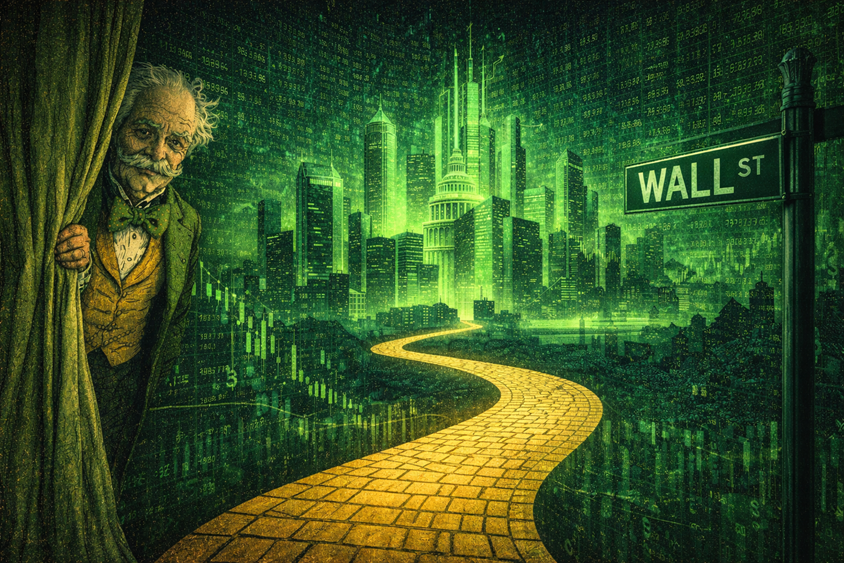
Seen this way, the story stops being cute and starts being clever. Gold roads that look solid but are hard to walk on. Silver shoes with real power that nobody explains properly. An entire city convinced it is wealthy because it is told to wear green glasses. And a booming authority figure whose main job is to manage belief. That may sound like fantasy, but it is also a pretty good description of how financial systems work.
And this is why the story still matters now, not just in 1900. The costumes have changed and the curtain is now digital, but the structure is the same. Power still relies on confidence. Money still works because people agree to believe in it. And the most dangerous moment for any system is when someone ordinary, curious, and slightly annoyed decides to pull on the rope and see who is really running the show.
Let’s look at the cast of characters and what I think they represent.
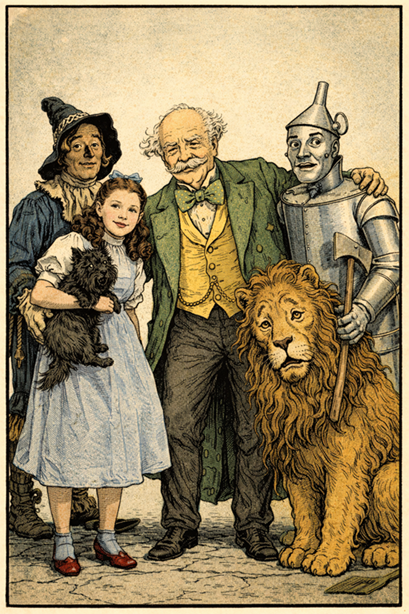
Dorothy Gale represents the American people. She is ordinary, without title or institutional authority, and she wants what most citizens want, safety, stability, and a way home. The crucial detail is that she already possesses the solution to her problem, yet she does not realize it. That lack of awareness drives the entire journey.
At her side is Toto, who represents common sense. Toto is a Cairn Terrier, a breed known for intelligence, alertness, and a natural instinct to hunt rats. Cairn Terriers were bred to chase vermin out of tight spaces and hidden corners. That is exactly what Toto does. He pulls back the curtain. He does not analyze policy or debate theory. He senses something is wrong and exposes it. Common sense often works the same way. When you read the story through Toto’s eyes you can quickly see that The Wonderful Wizard of Oz is a tale about the attack of common sense.
Along the road, Dorothy meets the Scarecrow, who represents farmers. The scarecrow is dismissed as unintelligent, yet he consistently proves practical and insightful. In the allegory, he suffers under tight money and deflation, conditions that hurt agriculture first. He knows more than the system gives him credit for.
Next comes the Tin Man, representing industrial workers. Rusted and frozen, he reflects factories stalled and wages lost when liquidity dries up. His longing for a heart suggests that compassion has been removed from economic decision-making.
Then there is the Cowardly Lion, who represents politicians. The Cowardly Lion has a loud voice and visible authority but lacks the courage to challenge the system that creates the very problems he recognizes.
When Dorothy arrives in Oz, she encounters the Munchkins, representing everyday workers and small business owners. They feel the consequences of bad policy first and celebrate immediately when oppression ends. They know who harms them even if they lack the power to confront it. In contrast stands Glinda, who represents knowledge and truth. She is calm and patient, never imposing authority but instead explaining what is already true. She reveals that Dorothy had the power all along.
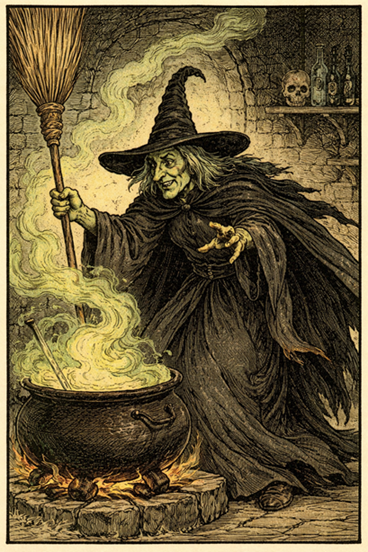
Opposing them is the Wicked Witch of the West, who represents debt, fear, coercion, and enforcement. Throughout the book and movie, the Witch is always threatening Toto, who represents common sense. She rules through fear, seeks control of the silver shoes, and relies on intimidation rather than strength. When confronted with truth, she melts.
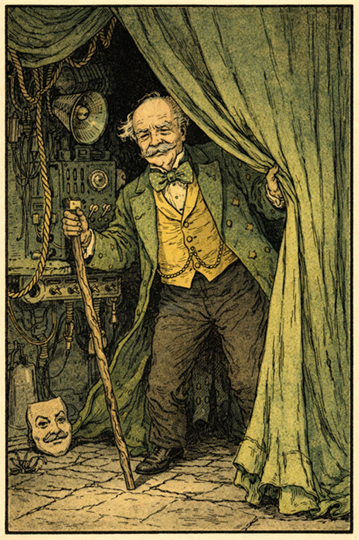
Finally, there is the Wizard himself, representing centralized monetary authority. He appears powerful and commanding, sustained by spectacle and distance, yet is ultimately revealed to be ordinary. His power exists because people believe in it. And all of this unfolds in the Emerald City, a symbol of illusory wealth and centralized power, often compared to Washington, D.C., where prosperity appears dazzling because everyone is required to see it through green-tinted lenses.
In the book, The Wonderful Wizard of Oz, Dorothy wears silver slippers, not ruby ones, this is a deliberate signal tied to the fierce bimetallic debates of the late 19th century over gold, silver, and who the monetary system should serve. That detail matters because silver represented flexibility and relief for farmers and workers, while gold alone favored creditors and tight money, making the slippers a quiet but unmistakable economic statement. Also, in the book, when Dorothy, the Scarecrow, the Tin Man, and the Cowardly Lion arrive at Emerald City (Washington D.C.), they are all required to wear green glasses, creating the illusion of wealth rather than actual prosperity. In the movie, this element disappears entirely, replaced by a grand spectacle of parades, ornate carriages, and theatrical pageantry. The shift turns Emerald City from a lesson about manufactured belief into a celebration of surface-level glamour that dazzles first and asks questions later.
In the original telling, the silver shoes are not a whimsical costume choice but a pointed reference to one of the most consequential economic debates of the era: whether the nation’s money should be tied exclusively to gold or expanded through a bimetallic system that included silver. For farmers and workers squeezed by deflation and debt, silver represented relief, liquidity, and a broader distribution of opportunity, while gold-only money favored stability for creditors and institutions. Dorothy’s journey is revealing because she never acquires the solution along the way. She is wearing it from the start. The power to resolve her problem exists before the Wizard, before Emerald City, and before any external authority intervenes. The quiet lesson embedded in the story is not revolutionary but unsettling: systems often condition people to seek permission for solutions they already possess, and the longest journeys are sometimes taken not to find power, but to recognize it.
The Yellow Brick Road looks perfect at first glance. Bright, orderly, and impossible to miss. That is the appeal of gold-backed systems. They feel solid. Predictable. Safe. But try walking on it for any length of time and you start to feel the cost. It is rigid. There is no room to step off, slow down, or adapt. Staying on the road feels responsible, even virtuous, but it is exhausting because flexibility has been traded for discipline. That is the trade the gold standard offered. Stability in exchange for movement. Certainty in exchange for resilience. And when a system looks strong but limits how people can move, adjust, or breathe, it does not collapse right away. It just quietly wears everyone down while insisting that the discomfort is the price of order.
Dorothy is not a hero in the traditional sense, and that is precisely the point. She does not hold office. She does not command armies. She is not credentialed, certified, or sanctioned by any authority. She is simply a participant in the system. And like most participants, she wants predictability, fairness, and something that feels like home. Her problem is not a lack of power. It is a lack of awareness.
What makes Dorothy’s journey so revealing is that the solution never changes. She does not acquire new tools. She does not receive permission from the Wizard. She does not earn her way out through obedience or performance. The power exists from the beginning. The silver shoes are on her feet the entire time. The system’s greatest success is convincing her that she needs approval to use what she already has.
This is the central insight of the story. Power without awareness is still power unused. Systems endure not because people are weak, but because they are uninformed. Dorothy’s awakening is not a rebellion. It is a realization. And in that realization, the entire structure of Oz quietly collapses, not through violence or reform, but through understanding.
Toto is not big, brave, or particularly polite, which already puts him at a disadvantage in any bureaucratic environment. He is small, loud, and inclined to bite things that do not make sense. This is exactly why he is the most dangerous character in Oz. Toto does not respect credentials, robes, booming voices, or impressive machinery. He has the emotional range of a smoke detector. Something smells funny, and he is going to make noise about it until someone pays attention. Authority hates that.
What makes common sense so threatening to complex systems is that it ignores the complexity entirely. Toto does not debate the Wizard. He does not ask for a study, a white paper, or a panel discussion. He walks over and pulls on the curtain. That is the nightmare scenario for any system built on mystique and belief. Common sense short-circuits complexity by asking one rude question: is this real? Once that question is asked, the fog machine stops working, the levers are exposed, and the Great and Powerful Wizard suddenly looks like a man who really hoped no one would check behind him.
The companions Dorothy collects along the road are not random. They are economic classes hiding in plain sight. Scarecrow stands in for farmers, routinely labeled as unintelligent by elites yet consistently demonstrating practical judgment and grounded insight. He is harmed most by tight money and deflation, because when liquidity dries up, it is the people closest to production who feel it first, even as the system continues to underestimate their understanding. Tin Man represents industrial workers, frozen in place by a lack of circulating capital, rusted by inactivity as factories stall and wages disappear. His desire for a heart is not sentimental. It is an indictment of policy choices that removed compassion from economic decision making. Then there is Cowardly Lion, the embodiment of political leadership that speaks loudly, recognizes the need for change, and yet recoils at the moment action is required. He has power, visibility, and influence, but no conviction, illustrating the most dangerous imbalance of all: authority without courage.
The Munchkins may be small, but they are many, and that is exactly why they matter. In every economic system, it is the everyday worker who feels pressure first and relief first, long before experts finish arguing about theory. When the Wicked Witch falls, the celebration is immediate because the pain was immediate. They already knew who was hurting them. They did not need a report to explain it. This is the part most policies overlook. Consequences do not arrive evenly. They travel downward. Tight money, bad rules, and distant decisions always land hardest at the bottom, where people live paycheck to paycheck, not press conference to press conference.
Glinda never raises her voice. She does not threaten. She does not dazzle with smoke or noise. She already knows the answer, and that is why she can afford to be calm. Glinda represents knowledge and understanding, the kind that does not need authority to work. Notice what she does not do. She does not give Dorothy power. She does not unlock anything. She simply explains what was already true. That is how real wisdom operates. It does not dominate. It does not demand obedience. It educates, then steps aside and lets people act for themselves.
The Wicked Witch of the West spends an awful lot of time hollering, threatening, and sending other people to do her dirty work, which is usually a sign she is not nearly as powerful as she claims. She wants the silver shoes because real power always attracts the loudest bullies, especially when they do not earn it themselves. Instead of strength, she relies on fear, and intimidation, the kind that works only as long as folks are scared enough not to look too closely. And when someone finally does, she does not go down fighting. She just melts. Turns out the truth is terrible for fear-based systems, because once people see what they are dealing with, there is nothing left to be afraid of.
The great trick of Oz is scale. Everything looks enormous. The voices are loud. The buildings are tall. The rules feel permanent. But once you get close, you realize the system is not as big as it wants you to think. It relies on distance, mystery, and intimidation to stay impressive. The moment you understand how it works fear loses its grip. Not because the system changes, but because you do.
That is the deeper lesson. Power is often already in the hands of the people living inside the system, but unused because no one told them where to look. Belief keeps things running long after logic stops making sense. If people accept the story, the machinery hums along. The second they stop believing, the curtain falls, the noise fades, and Oz shrinks back down to what it always was.
More than a century after The Wonderful Wizard of Oz was published, the mechanics it quietly critiques remain intact. Modern finance is far more sophisticated in appearance, layered with algorithms, derivatives, and digital infrastructure, but at its core it still depends on confidence. Markets function because participants believe in the rules, the institutions, and the narratives that support them. Complexity is not accidental. It creates distance between decision-makers and consequences, making systems harder to question and easier to accept.
That distance is reinforced culturally. People are taught, implicitly and explicitly, that money is too complicated for non-experts, that questioning it is irresponsible, and that stability depends on deference. The result is a system where authority is rarely challenged not because it is always correct, but because it is perceived as untouchable. Oz captures this dynamic perfectly. The Wizard’s power does not come from force. It comes from the belief that someone else must understand what is going on better than you do.
The enduring lesson of Oz is not ideological. It is practical. Progress begins with simple questions. Who is in control? How does it work? And what happens if the explanation does not hold up? Pulling back the curtain is not an act of rebellion. It is an act of clarity. And in a financial system that still thrives on spectacle and opacity, that clarity remains as valuable now as it was when Dorothy’s small dog decided to tug on a piece of fabric and change the story.
In the end, it turns out a fairy tale told the truth more clearly than a shelf full of economics textbooks because it refused to hide behind jargon and authority. The Wonderful Wizard of Oz warns us about a very real danger in modern life, confusing power with wisdom and volume with truth. Dorothy’s journey drives home the point that she was never powerless, only uninformed, and that is a condition shared by far too many people navigating complex systems they are told not to question. When the curtain is pulled back, the spell breaks, and what remains is not chaos but clarity. The real magic was never the Wizard, the road, or the city. It was understanding, and once you have it, no booming voice can take it away.
Dorothy’s journey follows the pattern that Joseph Campbell famously called the Hero’s Journey, even though she never volunteers for it. She begins in the ordinary world of Kansas, is pushed across the threshold by the tornado, and lands in Oz, a strange new realm with unfamiliar rules. Like every reluctant hero, she is told she cannot go home until she completes a task set by an authority figure. In this case, the authority is the Wizard, who sends her on a dangerous mission to retrieve the Wicked Witch’s broom, a symbol of conquest and proof of obedience.
That demand is important. The Wizard does not help Dorothy directly. He outsources risk. He requires her to do the impossible before granting what she wants most. In today’s markets, the parallel is familiar. Traders and investors are often told they must first “earn” clarity by enduring volatility, drawdowns, confusion, or complexity before they are allowed confidence or understanding. The broom represents external validation. Bring me proof. Survive the trial. Take the risk. Only then will you be rewarded. It is the system shifting responsibility downward while maintaining control at the top.
Dorothy completes the task, not through strength or superiority, but through accident and truth. The Witch melts, fear evaporates, and the threat vanishes far more easily than advertised. When Dorothy returns to Oz expecting resolution, she instead experiences the final and most important stage of the Hero’s Journey, revelation. The Wizard is exposed as an imposter. The booming authority was never real. The power she was chasing externally never existed there in the first place. The journey was not about defeating the Witch. It was about realizing that the system demanding proof was itself a fraud. And like all effective hero stories, Dorothy returns home changed, not because the world transformed, but because she now understands how it truly works.
If Oz were written today, the scenery would look more digital, but the structure would feel familiar. The Yellow Brick Road would not just be gold. It would be government bonds, structured products, stablecoins promising stability, Central Bank Digital Currencies promising efficiency, and a thousand financial vehicles marketed as safe passage. Add to that massive federal debt, expanding balance sheets, and a financial system layered with leverage, derivatives, and opaque plumbing. The road still shines. It still looks orderly. But it is harder than ever to see what is underneath it.
The Wizard would not be a man behind a curtain working levers. He would be an institutional framework sustained by confidence, policy language, and code. Federal debt climbs, yet markets rally. Currency purchasing power erodes slowly, quietly. Stablecoins claim stability by being backed by the very system they sit on top of. Central Bank Digital Currencies promise frictionless control and programmable money. Bitcoin offers decentralization and scarcity, challenging centralized authority in ways that silver once did. Meanwhile, there are countless places to store money that appear sophisticated but quietly destroy purchasing power through inflation, fees, leverage, or poor structure. The complexity itself becomes the curtain.
What would Dorothy say to today’s traveler? First, understand what you are walking on. Do not confuse shine with strength. Second, know what gives your money purchasing power and what quietly erodes it. Third, recognize that freedom in finance comes from optionality. The ability to move, to convert, to opt out, to choose differently. And finally, remember Toto. Pull back the curtain. Ask who benefits. Ask what backs the promise. Ask what happens if confidence breaks.
Dorothy’s final lesson was not rebellion. It was awareness. You may not control the size of federal debt, the rollout of digital currencies, or the global monetary order. But you can control where you place your capital, how you manage risk, and whether you follow the crowd blindly down the road. The modern Yellow Brick Road is crowded and noisy. The traveler who understands what truly holds value, and what merely looks impressive, is the one most likely to make it home.
Dorothy’s silver slippers represent something timeless. Purchasing power. Optionality. The quiet strength that comes from holding something of real value when storms hit. In every era, there are longer-term stores of value that protect you when systems wobble. Gold. Hard assets. Scarce digital assets. Productive enterprises. Those are your slippers. They are not flashy. They are not loud. But they matter when the wind starts blowing.
But traders do not live in Kansas. Traders live on the Yellow Brick Road.
Capital moves. Liquidity shifts. Leadership rotates. Sectors strengthen. Others weaken. And in that world, loyalty is not to ideology. It is not to gold. It is not to fiat. It is not to Bitcoin. It is not to headlines. For traders, the trend is the truth. Price reveals reality faster than pundits ever will.
Dorothy survived because she eventually stopped trusting spectacle and started recognizing what was actually happening around her. That is the trader’s edge. Traders should not argue with price. We observe it. We measure it. We align with it. And when the road bends, we bend with it.
Protect your purchasing power. Respect long-term stores of value. But when you step onto the road each day, follow what is moving. Pull back the curtain. Watch the flow of capital. And remember, the goal is not to worship the road.
The goal is to navigate it intelligently and make it home.
Economists have a special talent for explaining simple things in ways that make you want to nap, cry, or apply for a job involving heavy machinery. Give them a chalkboard and a few Greek letters and they can turn money, which you use every day, into something that sounds like it requires a lab coat and a permission slip.
That is why The Wonderful Wizard of Oz deserves a second look. It is usually treated as a cheerful parade of witches, slippers, and aggressively optimistic singing. But underneath the whimsy is a story that keeps tripping over uncomfortable truths about money, authority, and the strange things people will believe if the presentation is impressive enough.
If the lesson of Oz is awareness, then the modern question becomes simple. How do you see clearly in a market that moves faster than ever? Today’s Yellow Brick Road is not made of bricks. It is made of data, liquidity flows, sector rotation, and algorithmic execution. The spectacle is louder. The commentary is constant. And the curtain is thicker. Traders who rely only on instinct are competing against machines that process millions of data points in seconds.
That is where VantagePoint’s artificial intelligence starts becoming leverage. Our A.I. enhances clarity. It helps identify trend strength, shifting momentum, and emerging leadership before the crowd recognizes it. It removes emotion from decision-making and keeps you focused on evidence. If the trend is the truth, then the right tools help you measure that truth objectively.
Think of it this way. Toto pulled back the curtain. Today, VantagePoint A.I. helps you do the same thing in markets. It highlights what is happening beneath the headlines. It isolates where capital is flowing. It shows you when a trend is strengthening and when it is breaking. That edge is about recognizing probability.
If you want to learn how professional traders use VantagePoint artificial intelligence to stay aligned with real market strength, I invite you to attend our upcoming live online Learn How to Trade with VantagePoint A.I. MasterClass . Discover, live, how A.I. identifies high-probability opportunities, how to manage risk intelligently, and how to stay on the right side of the right trend at the right time. The road will always be there. The question is whether you are navigating it with clarity or guessing in the dark.
You can keep wandering down the Yellow Brick Road with nothing but a hunch and a headline… hoping the Wizard’s voice booming from the clouds is telling you the truth.
Or you can pull back the curtain.
Here is the difference.
VantagePoint A.I. is not another loud voice in Emerald City. It is Toto. It pulls back the curtain. It filters out the noise. It shows you where the real strength is building before the parade starts. It helps you see which sectors are gaining power and which ones are about to melt.
The future is already in motion. Algorithms are scanning. Institutions are positioning. Trends are forming whether you notice them or not.
You can keep trusting the smoke and mirrors.
Or you can attend the Masterclass, see VantagePoint in action.
The Wizard survives on spectacle.
Traders survive on truth.
Come experience the difference.
It’s not magic.
It’s machine learning.
THERE IS A SUBSTANTIAL RISK OF LOSS ASSOCIATED WITH TRADING. ONLY RISK CAPITAL SHOULD BE USED TO TRADE. TRADING STOCKS, FUTURES, OPTIONS, FOREX, AND ETFs IS NOT SUITABLE FOR EVERYONE.IMPORTANT NOTICE!
DISCLAIMER: STOCKS, FUTURES, OPTIONS, ETFs AND CURRENCY TRADING ALL HAVE LARGE POTENTIAL REWARDS, BUT THEY ALSO HAVE LARGE POTENTIAL RISK. YOU MUST BE AWARE OF THE RISKS AND BE WILLING TO ACCEPT THEM IN ORDER TO INVEST IN THESE MARKETS. DON’T TRADE WITH MONEY YOU CAN’T AFFORD TO LOSE. THIS ARTICLE AND WEBSITE IS NEITHER A SOLICITATION NOR AN OFFER TO BUY/SELL FUTURES, OPTIONS, STOCKS, OR CURRENCIES. NO REPRESENTATION IS BEING MADE THAT ANY ACCOUNT WILL OR IS LIKELY TO ACHIEVE PROFITS OR LOSSES SIMILAR TO THOSE DISCUSSED ON THIS ARTICLE OR WEBSITE. THE PAST PERFORMANCE OF ANY TRADING SYSTEM OR METHODOLOGY IS NOT NECESSARILY INDICATIVE OF FUTURE RESULTS. CFTC RULE 4.41 – HYPOTHETICAL OR SIMULATED PERFORMANCE RESULTS HAVE CERTAIN LIMITATIONS. UNLIKE AN ACTUAL PERFORMANCE RECORD, SIMULATED RESULTS DO NOT REPRESENT ACTUAL TRADING. ALSO, SINCE THE TRADES HAVE NOT BEEN EXECUTED, THE RESULTS MAY HAVE UNDER-OR-OVER COMPENSATED FOR THE IMPACT, IF ANY, OF CERTAIN MARKET FACTORS, SUCH AS LACK OF LIQUIDITY. SIMULATED TRADING PROGRAMS IN GENERAL ARE ALSO SUBJECT TO THE FACT THAT THEY ARE DESIGNED WITH THE BENEFIT OF HINDSIGHT. NO REPRESENTATION IS BEING MADE THAT ANY ACCOUNT WILL OR IS LIKELY TO ACHIEVE PROFIT OR LOSSES SIMILAR TO THOSE SHOWN.